 The tragedy in Love Canal, New York actually started off with good intentions. Love Canal, a town located near Niagara Falls and the New York-Canadian border was originally supposed to be a model industrial city powered by an alternative energy system designed by William Love. In 1894, Love started digging a canal sixty feet wide and three thousand feet long in the hopes that this canal would connect the Niagara River to Lake Ontario and provide water and hydroelectric power to the community.
However, Love’s dream was halted when he lost his funding to continue building the canal, due to Nikola Tesla's introduction of an alternating current and the panic of 1893.
Love permanently stopped construction and sold the land (and the half finished canal). Hooker Chemical Company purchased the canal and some of the surrounding area to use as a chemical dumping site. In the span of 10 years, Hooker Chemical Company (and The City of Niagara and the United States Army occasionally) had dumped about 21,000 tons of chemical waste into the canal. The waste was found to be a host of over 200 identified toxic substances, including dioxins, PCBs, and 11 known carcinogens.
This dumping continued until 1953 when Hooker Chemical Company filled up the canal with dirt and sold it and the surrounding area to the New York Board of Education for one dollar. The dirt that covered the canal eventually started to grow grass and other vegetation and the chemical wasteland virtually disappeared. The company did provide a disclaimer about the chemical dumping, however the board of education didn't really understand the potential risks of the pollutants. The school board disregarded the information and built an elementary school on the land. Along with the school, an entire community was built in the area in that time period. Many young couples and families moved into these cheap homes unaware and uninformed of the history of this chemical wasteland.
 As time went on, the residents of the seemingly normal town of Love Canal started to notice some strange things happening to their homes and the surrounding areas. They complained of noxious odors and mysterious pools of black goop in their basements and in grasses (especially those nearest to the canal, but they were unaware of that) and that the vegetation in their yards were dying. It was reported that many children and animals would have skin burns and rashes after playing outside in the grasses, especially those in the elementary schools. An increased number of unexplained stillbirths, birth defects, mental retardation and other reproduction issues were reported, in addition to an increased number of cancer, and asthmatic, urinary, and convulsive disorders.
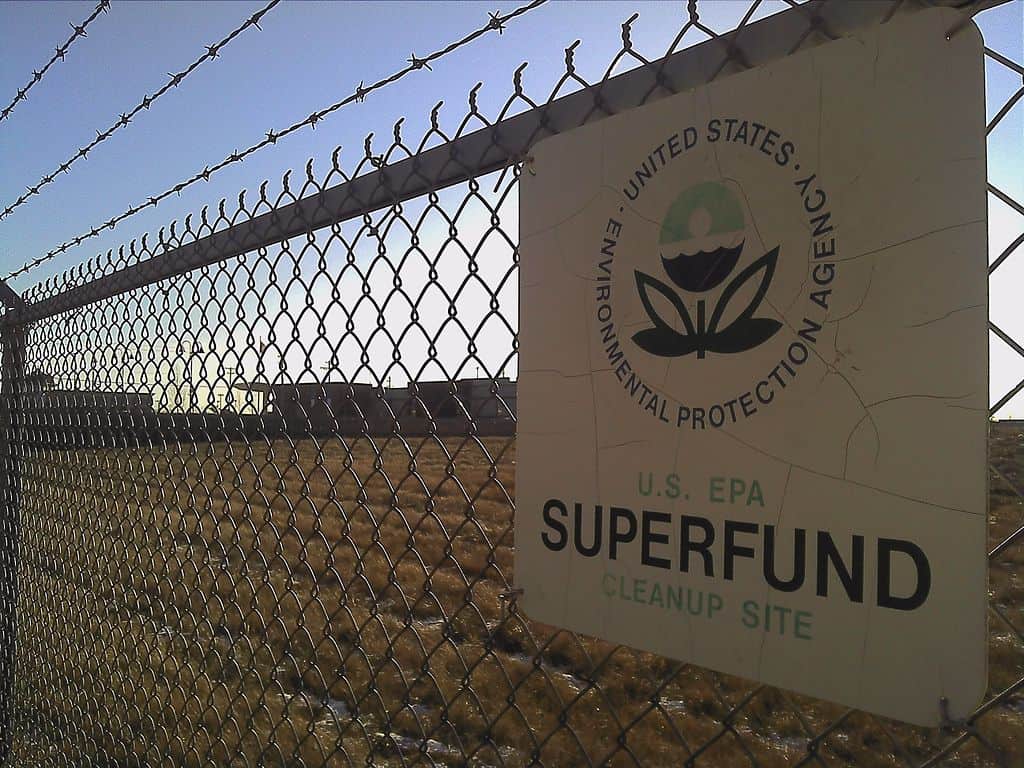 Following the evacuation, attempted cleanup followed. The canal was topped in clay and surrounded by a drainage system since the landfill was too big, too expensive, and too toxic to move. Today, remnants of the toxic waste site still remain in the canal. The area immediate to the canal is now fenced off. By the late 80s and early 90s, the Environmental Protection Agency deemed Love Canal safe to live in. The homes around it were refurbished, and started being sold again a few years later at extremely low prices which caused much social unrest.
As time went on, the residents of the seemingly normal town of Love Canal started to notice some strange things happening to their homes and the surrounding areas. They complained of noxious odors and mysterious pools of black goop in their basements and in grasses (especially those nearest to the canal, but they were unaware of that) and that the vegetation in their yards were dying. It was reported that many children and animals would have skin burns and rashes after playing outside in the grasses, especially those in the elementary schools. An increased number of unexplained stillbirths, birth defects, mental retardation and other reproduction issues were reported, in addition to an increased number of cancer, and asthmatic, urinary, and convulsive disorders.
In 1978, The Niagara Gazette gave a report on a study of the area of Love Canal, exposing its history and some of the known dangerous pollutants that had been found at the time. This was the impetus for a massive social justice and environmental justice movement that has shaped these movements today.
The movement to clean up and evacuate Love Canal, lead by Lois Gibbs, gained lots of media and political attention very quickly, although initially, all the claims were denied. In 1978 The health commissioner of New York and president Jimmy Carter funded the immediate evacuation of the 239 families closest to the canal, leaving 780 families in Love Canal and exposed to these toxic chemicals. For the rest of the families, the Environmental Protection Agency deemed them not at risk, since their homes did not directly line the canal, and therefore refused to evacuate them. As fear in the people rose, Gibbs organized the leftover residents formed the Homeowners Association of Love Canal, to push politically for their evacuation. Many of these families were poor and did not have money to up and leave their homes.The families were outraged because they were clearly still at risk. It wasn't until two years and a collection of protests and lawsuits later that the funding to move the rest of the residents out of Love Canal came through. So, in 1980 Love Canal was officially declared unsafe and all residents were relocated. Proceeding this, Lois Gibbs founded Superfund and what is now known as the Center for Health, Environment, and Justice to prevent future tragedies like Love Canal from happening again.
Following the evacuation, attempted cleanup followed. The canal was topped in clay and surrounded by a drainage system since the landfill was too big, too expensive, and too toxic to move. Today, remnants of the toxic waste site still remain in the canal. The area immediate to the canal is now fenced off. By the late 80s and early 90s, the Environmental Protection Agency deemed Love Canal safe to live in. The homes around it were refurbished, and started being sold again a few years later at extremely low prices which caused much social unrest.
The Center for Health, Environment, and Justice really paved the path toward social and environmental justice. It is a voice for communities like Love Canal that don't have many options, especially in socio-economically disadvantaged areas and minority communities.
It is too scary to think that the very soil under your feet can be polluted and damaging your body- without you even knowing that it is doing so. Too often communities are found with toxic pollutants, many communities unaware of the harm being placed upon them. In this seminar, we have looked at a number of other communities similar to Love Canal, most with unlucky and unresolved outcomes. In Love Canal, much of the animal and plant wildlife has been damaged. It is important to note that not only are the people left in the dark, but so is the environment. The environment is treated with so much disrespect, and the people causing the harm usually do so undetected. This needs to stop.
This is where the issue stands, and I'd like to open it up for debate and questioning: is it safe for Love Canal to be inhabited again. Keep in mind that the dump has only been maintained, but not removed. Based off your knowledge and opinion, did the way the government handled this situation create an environment ready to be inhabited again?
The pathway to environmental and social justice are new and a little shaky, but I have faith that with time, these issues will get the attention they deserve.
Sources:
Associated Press. (2013, November 2). 'Love Canal' still oozing poison 35 years later. Retrieved December 1, 2014, from http://nypost.com/2013/11/02/love-canal-still-oozing-poison-35-years-later/
Dioxins and their effects on human health. (n.d.). Retrieved December 1, 2014, from http://www.who.int/mediacentre/factsheets/fs225/en/
Gibbs, L. (2002, January 1). Love Canal :: Start of a Movement. Retrieved December 1, 2014, from http://www.bu.edu/lovecanal/canal/
Mah, A. (2013, August 7). Lessons from Love Canal: Toxic expertise and environmental justice. Retrieved December 2, 2014, from https://www.opendemocracy.net/alice-mah/lessons-from-love-canal-toxic-expertise-and-environmental-justice
O'Brien, C. (2013, January 23). Cortney O'Brien - Residents Return to Love Canal: 'How Dare They Say This Area is Safe!' Retrieved December 1, 2014, from http://townhall.com/tipsheet/cortneyobrien/2013/10/23/residents-return-to-love-canal-how-dare-they-say-this-area-is-safe-n1730803
Report, R. (2013, November 25). Love Canal: A Legacy of Doubt. Retrieved December 1, 2014.
University at Buffalo Libraries. (n.d.). Retrieved December 1, 2014, from http://library.buffalo.edu/specialcollections/lovecanal/about/chronology.php

No comments:
Post a Comment